Productos
How to read a kosher product label
Beyond the certification symbol, kosher labels contain key information about whether a product is suitable for your table.
Properly reading a kosher label goes beyond looking for the certification symbol. There are several elements worth always checking, and learning to read them fully avoids surprises at the table.
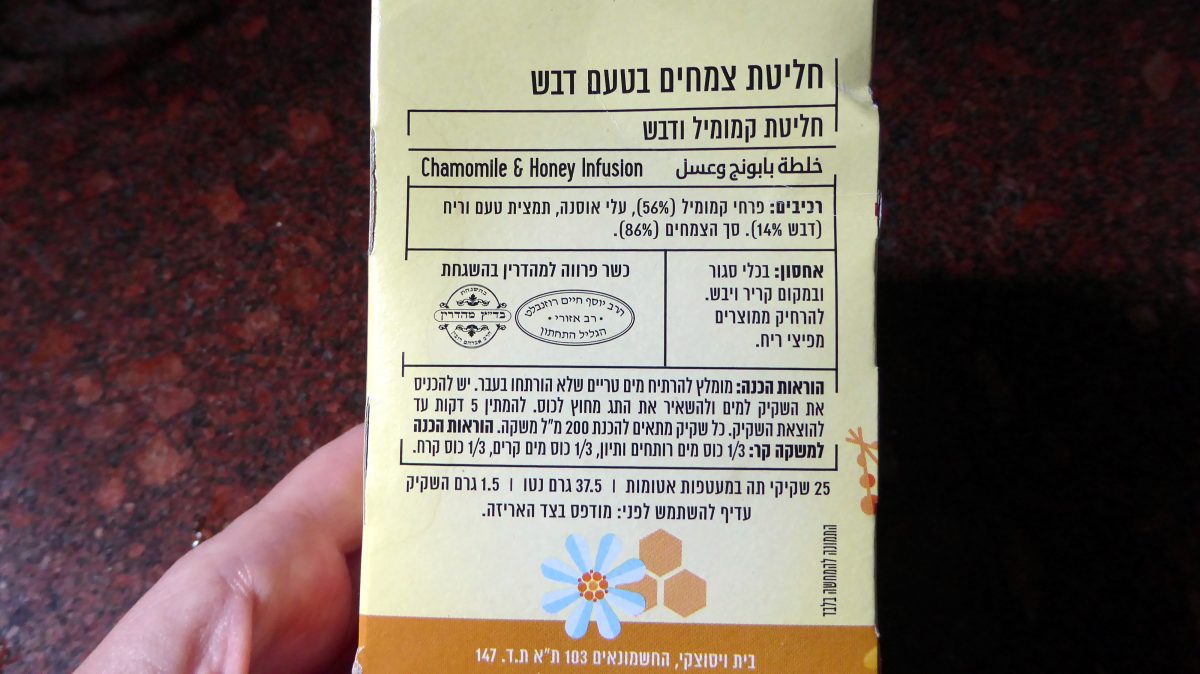
The four things worth checking, in order
- The certifier's symbol: identifies which agency supervised the product. It's important to recognize trustworthy certifiers (covered in kosher certification symbols), since not every symbol in the world has the same level of rigor.
- The category: "Dairy" or "D," "Meat" or "M," "Pareve" (neutral), or "Fish" (which in many traditions is treated as a category separate from meat). This letter determines what other foods the product can be combined with.
- "Kosher for Passover": an additional indication needed during the holiday, distinct from the regular kosher certification used the rest of the year. A product can be kosher year-round but not fit for Passover if it contains any derivative of the five grains.
- Certification date or code: some certifiers include a code or date to verify that the seal is still current, since recipes and factory processes can change, and certification can be lost without the packaging design changing at all.
The "DE" category: the detail most often overlooked
Beyond "D," "M" and "Pareve," some labels include "DE" (dairy equipment): it means the product contains no dairy ingredients, but was made on the same equipment as dairy products. For practical purposes, many opinions treat a "DE" product more flexibly than a true "D" product, but not the same as pure pareve. It is worth understanding this difference in detail in what pareve means.
Why you shouldn't assume by elimination
When a product has no visible certification but the ingredient list looks simple (for example, just water, salt and a vegetable), it can be tempting to assume it is kosher by elimination. The general recommendation from kashrut authorities is not to do that: many additives and industrial processes are not obvious at a glance, from enzymes used in processing to equipment shared with other products on the same production line.
Frequently asked questions
Is a product with no category (D/M/Pareve) printed on it always pareve?
Don't assume it. The absence of a letter doesn't confirm anything on its own; if the label doesn't clarify the category, it's worth looking the product up directly in the certifier's database.
Do barcode scanning apps replace the need to check the physical label?
They help a lot, but it's best to use them as a complement rather than a full replacement, especially with imported or recently manufactured products the database may not have updated yet.
Do all countries require the kosher label to be in the local language?
No, it's common to find imported products with kosher information only in the language of origin (Hebrew, English), which makes it more valuable to recognize the symbols by sight instead of relying on the text.
Related reading
To recognize the most common seals at a glance, see kosher certification symbols. On KosherMap you can also search products by name or barcode and filter directly by certifier, category and type, so you don't have to rely solely on the physical label.
📰 You might be interested
Productos
Kosher wine: why it needs special supervision
Wine has a particular status in halacha: to be kosher, it must be made and handled exclusively by observant Jews.
Productos
Kosher gelatin: the halachic debate
Gelatin is one of the most debated ingredients in the kosher world, because its animal origin can compromise its status.
Productos
Alcohol and spirits: what it takes for them to be kosher
Whiskey, vodka, rum and other spirits are often kosher by nature, but there are important exceptions to keep in mind.
Productos
The most common kosher certification symbols
OU, OK, Star-K, KSA... there are dozens of kosher certification symbols around the world. We help you recognize the most common ones.