Productos
Kosher wine: why it needs special supervision
Wine has a particular status in halacha: to be kosher, it must be made and handled exclusively by observant Jews.
Some time ago we were able to visit a winery in Mendoza that makes kosher wine, and seeing the process up close helps explain why wine has such different rules from every other food. With almost anything else, it is enough for the ingredients and the process to meet certain requirements. Not with wine: halacha requires that everyone who touches it during production, from the moment the grapes come in until the bottle is sealed, be an observant Jew. The reason is historical: wine used to be used in idolatrous rituals, and that is where the restriction comes from.
A particular division of labor: the winemaker and the yehudi
In practice, this creates a fairly particular division of labor. The person who actually knows about wine is the winemaker, who is usually not Jewish (the goy), and who tells the crew what to do at each stage: when to harvest, how to ferment, what blends to make. But the person who actually moves the wine, opens the valves, and does anything that involves touching the product is always an observant Jew (the yehudi). The expert directs, the yehudi executes, and all of it under constant rabbinic supervision at every stage of the process.
The wine rests in different settings depending on the stage, and part of it is kept in oak barrels, which can be reused about three times before losing their aromatic properties.
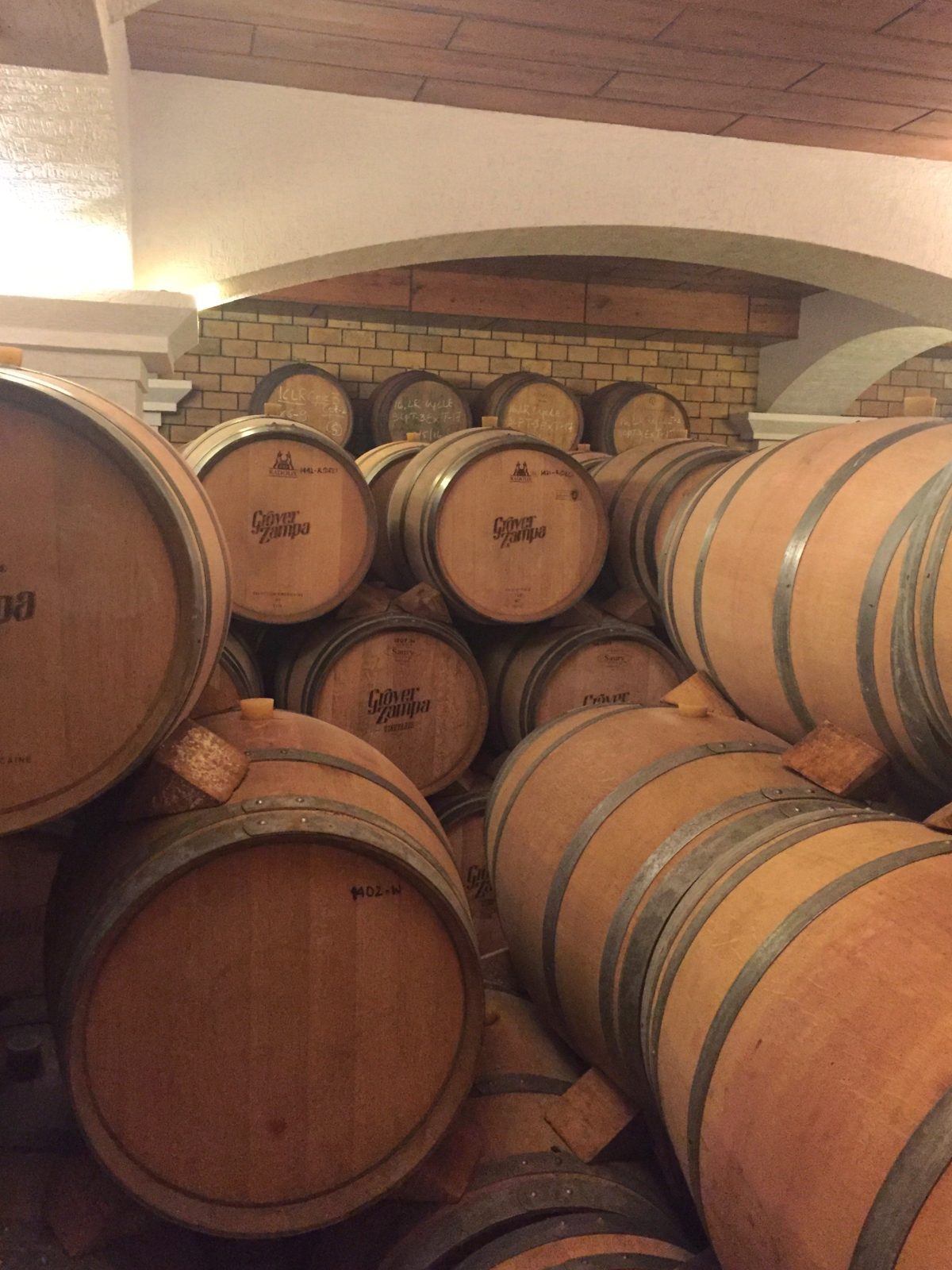
Every barrel is sealed, and that seal is not a minor detail: it is the guarantee that no outsider touched the contents. We were told about a case that shows just how far this goes. In a barrel holding thousands of liters, they noticed the seal was missing right where it should have been closed: it was open. The Rabbi of Buenos Aires himself had to come verify the situation in person, and he ruled that the wine had been left without supervision. The result: those thousands of liters could no longer be sold as kosher.
The exception that solves the problem for large events
There is also a special category, mevushal wine ("boiled"), which is wine pasteurized at a specific temperature. Once a wine is mevushal, it keeps its kosher status even if served or touched by a non-Jew afterward. That is why it is so practical for events, restaurants and catering, where there is no way to control who picks up each bottle. The full detail of how this exception works is in mevushal: kosher wine that can be served without restrictions.
Where it is produced today
Today there is good-quality kosher wine in almost every wine-growing region in the world. Mendoza is an important hub in Argentina, and kosher wine is also produced in Chile, France, Spain, Italy and, of course, Israel, certified by the leading rabbinic agencies. The quality of these wines has improved enormously in recent decades: years ago kosher wine had a reputation for being sweet and of limited quality, but today it competes on equal footing with conventional wines in blind tastings.
Frequently asked questions
Why does wine have such different rules from solid food?
It comes from the restriction's historical origin: wine was specifically used in idolatrous ceremonies in ancient times, something that didn't happen the same way with other foods, and that specific concern created its own, stricter rule.
Does grape juice have the same restrictions as wine?
Yes, unfermented grape juice follows the same handling criteria as wine, precisely because it can ferment and turn into wine.
How do I know if a bottle of wine has the correct supervision?
By looking for the seal of a recognized certifier on the label; without that seal there is no way to confirm the full chain of Jewish handling was respected.
Related reading
For the exception that allows serving wine without restrictions on who touches it, see mevushal wine. And for other drinks where wine's origin also comes into play, see alcohol and spirits.
📰 You might be interested
Productos
Kosher gelatin: the halachic debate
Gelatin is one of the most debated ingredients in the kosher world, because its animal origin can compromise its status.
Productos
Alcohol and spirits: what it takes for them to be kosher
Whiskey, vodka, rum and other spirits are often kosher by nature, but there are important exceptions to keep in mind.
Productos
The most common kosher certification symbols
OU, OK, Star-K, KSA... there are dozens of kosher certification symbols around the world. We help you recognize the most common ones.
Productos
How to read a kosher product label
Beyond the certification symbol, kosher labels contain key information about whether a product is suitable for your table.