Halajot
How to separate challah
Separating challah is a specific commandment that applies when kneading dough in large quantities, rooted in the Temple offerings.
Separating challah (hafrashat challah) is a biblical commandment that originally required giving a portion of bread dough to the priests (kohanim) of the Temple in Jerusalem. After the Temple's destruction, the practice changed: today, instead of being given away, the separated portion is burned or discarded respectfully.
When this mitzvah applies
This mitzvah applies when kneading a significant amount of dough made with one of the five grains (wheat, barley, oats, rye or spelt) — the exact minimum amount (generally around 1.2 kg of flour) varies depending on which halachic opinion is followed. Below that amount, separating is not obligatory, though some customs do it anyway without the blessing.
The step-by-step process
- Knead the bread dough normally, until it reaches the required minimum amount.
- Separate a small portion (traditionally olive-sized or larger, depending on custom).
- Recite the corresponding blessing before separating the portion, if the amount of dough reaches the minimum that requires it.
- Burn the separated portion (wrapped in aluminum foil, in the oven) or discard it in a way that it is not used for regular consumption.
This practice is why many certified industrial kosher bakeries separate challah as part of their production process, and why many Jewish women and families do it at home whenever they bake bread or challah for Shabbat in sufficient quantity.
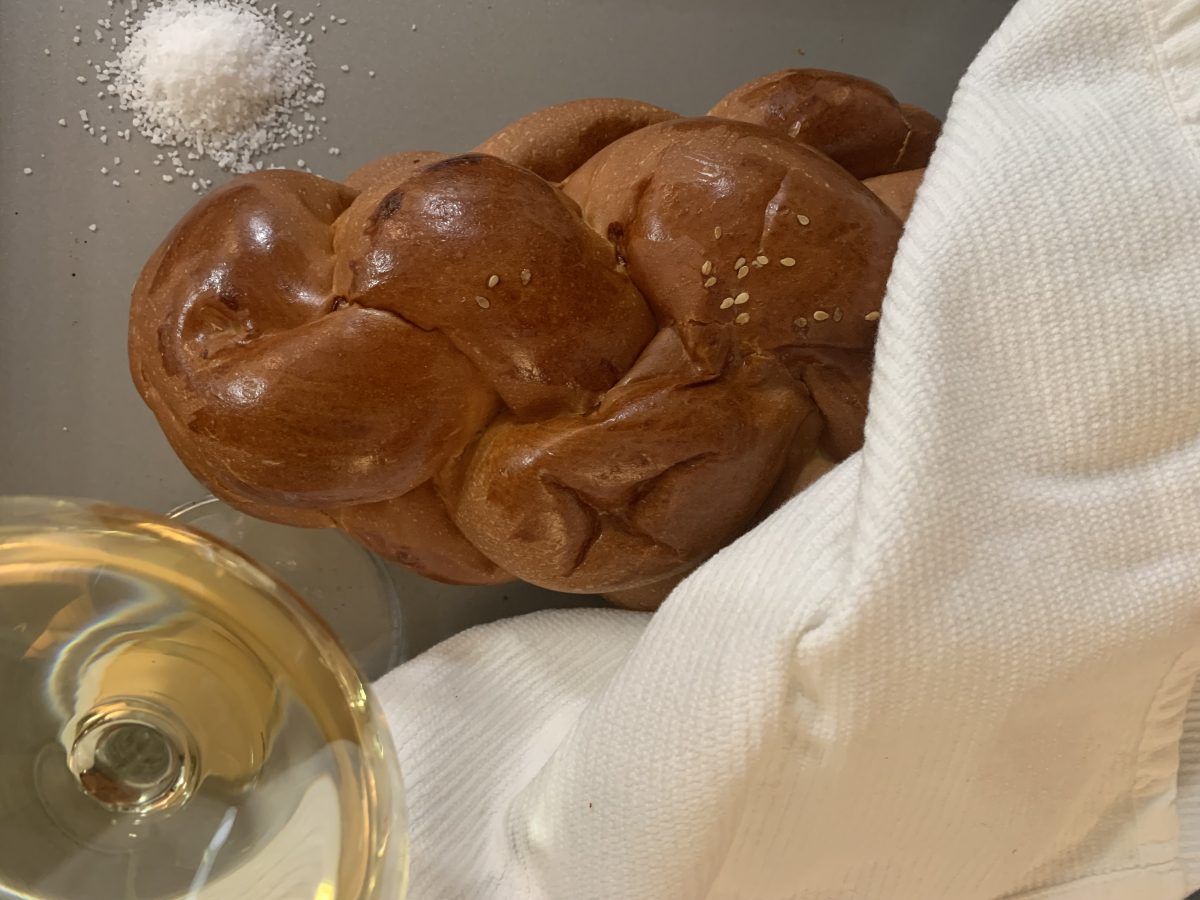
A family ritual, beyond the technical requirement
In many homes this becomes a special moment. In ours, for instance, the girls always try to reach the minimum amount of dough specifically so they can separate the challah with a blessing, since doing it with the berachah carries extra meaning. Beyond the technical requirement, it ends up being a family ritual built around the oven.
Over time, many families turn this moment into an almost weekly custom, especially when baking bread or challah for Shabbat: the older girls in the house take charge of calculating the amount of flour to make sure they reach the minimum, and the moment of separating the portion with the blessing becomes a fixed part of the Friday routine.
Frequently asked questions
Do I need to separate challah if I only knead a small amount, for a small family?
If the minimum amount of flour isn't reached, separation isn't obligatory according to halacha, though some families do it anyway, without the blessing, as a custom.
Can challah be separated from dough that isn't specifically for bread (for example, pastries)?
Yes, the mitzvah applies to any dough made with the five grains that reaches the minimum amount, not just traditional bread.
What happens if I forget to separate the challah before baking?
It can be separated even after the bread is baked, though it's best to do it beforehand; consult a rabbi if this specific doubt comes up.
Related reading
If you want to go deeper, the Orthodox Union's guide covers the laws of hafrashat challah with sources, and you can check the Wikipedia entry on challah for historical context and regional variations of the bread. On other holidays and food customs in the Jewish calendar, see the Jewish calendar and holidays.
📰 You might be interested
Halajot
Insects in fruits and vegetables: how to check them properly
The Torah forbids eating insects, so checking fruits and vegetables before eating them is a core part of keeping a kosher kitchen.
Halajot
Meat and milk: why they don't mix
The separation of meat and milk is one of the best-known pillars of kashrut. We explain its origin, its scope and how it applies in practice.
Halajot
Bishul Akum: why some cooked foods need Jewish supervision
There is a specific category of rabbinic laws about food cooked by non-Jews, known as bishul akum. We explain what it's about.
Halajot
Tevilat Kelim: the ritual immersion of new utensils
Before using certain new kitchen utensils made by a non-Jewish manufacturer for the first time, there is a custom of immersing them in a mikveh.