Halajot
Meat and milk: why they don't mix
The separation of meat and milk is one of the best-known pillars of kashrut. We explain its origin, its scope and how it applies in practice.
The prohibition on mixing meat and milk is based on a verse that appears three times in the Torah: "You shall not cook a kid in its mother's milk." Oral tradition interpreted this phrase as a triple prohibition: not to cook, not to eat, and not to derive any benefit from a mixture of meat and milk.
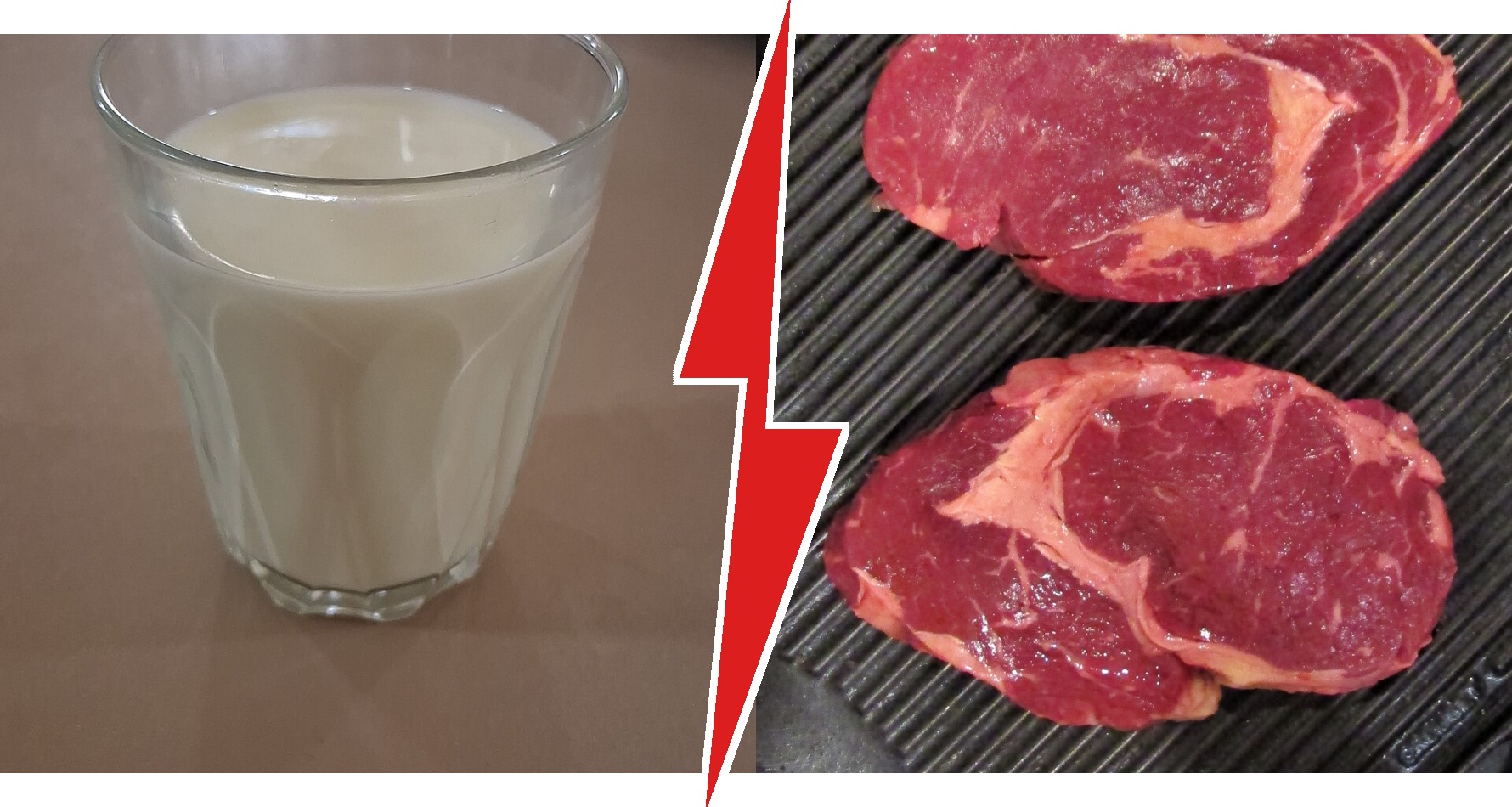
That last part often comes as a surprise. Someone who keeps kosher not only refrains from eating a dish of meat with cream: they also cannot sell it or give it away, because economic benefit is included in the prohibition too.
The three categories that organise the whole kitchen
From this comes the division of all food into three groups that anyone keeping kosher knows by heart: meat (meat and its derivatives), dairy (milk and its derivatives) and pareve (neutral: fruits, vegetables, eggs, fish, grains).
The pareve category is the most versatile and therefore the most sought after by the food industry: a pareve dessert can be served after a meat meal, something impossible with a dairy one. If you want to go deeper into that point, we develop it in the article on what pareve means.
Why you need two sets of everything
This does not stay theoretical. In an observant kosher kitchen the utensils, pots, plates and even the dishwasher are divided into two separate sets. The reason is a halachic principle called bliot: when food is cooked in a vessel at high temperature, the flavour is considered absorbed into the walls of that vessel. A pot in which you boiled milk "is" dairy even if it is impeccably clean, and if you then cook meat in it, that meat is compromised.
The practical solution most families use is colour coding: one colour for meat, another for dairy. Red and blue is the most widespread combination, but any will do as long as it is consistent. This applies to pots, pans, cutlery, cutting boards, sponges and dish towels.
And if they get mixed up by mistake? There are kashering procedures that allow certain utensils to be recovered: hagalah for metal utensils is the most common. But not every material can be kashered, and the correct procedure depends on the case, so it is worth consulting.
Waiting times between meat and dairy
After eating meat you must wait before consuming dairy. The exact time is one of the most visible differences between communities:
- Six hours: the most widespread custom, followed by most Sephardic communities and many Ashkenazi ones.
- Three hours: a custom of German origin, still practised in some families.
- One hour: the Dutch custom, the shortest of the traditional ones.
The reason given by the sources is twofold: meat leaves residue between the teeth, and its flavour lingers in the mouth longer than that of other foods. In the reverse direction — from dairy to meat — no wait is needed: rinsing your mouth and eating something neutral, such as a piece of bread, is enough.
The exception is hard, well-aged cheeses, which in several communities require the same full wait as meat, precisely because their flavour is more persistent. The important thing here is not to improvise: the custom is inherited from the family or defined with the community rabbi, not chosen for convenience.
How this translates onto supermarket labels
This is why so many labels carry a small letter next to the certification symbol: "D" for dairy, "M" for meat, or simply "Pareve". Just by looking at that letter you instantly know whether you can combine that product with what you are about to eat.
There is a fourth mark that causes quite a lot of confusion: "DE", for dairy equipment. It means the product has no dairy ingredients, but was made on a production line that also processes dairy. It cannot be eaten together with meat, but it can be eaten after meat. It is an intermediate category that exists precisely because modern factories share equipment between products. We explain it in detail in how to read a kosher label.
Frequently asked questions
Does chicken also count as meat?
Yes. By Torah law chicken would not be included in the prohibition, which speaks of "a kid", but the sages extended it to all poultry to avoid confusion. Today chicken is treated exactly like red meat for these purposes.
And fish?
Fish is pareve, so technically it can be combined with dairy — salmon with cream is in fact a classic. With meat it is different: there is a widespread custom of not eating them together on the same plate, but for health reasons according to the Talmud, not because of the meat-and-milk prohibition. More detail in kosher fish.
Can I have just one oven?
Yes, that is the most common setup. It is handled by covering food well, using dedicated trays, or assigning the oven to a single category. The simplest option for someone just starting out is to designate it for pareve and meat, and handle dairy on the stovetop.
Further reading
If you are organising your kitchen, the guide on how to set up a kosher kitchen from scratch turns all of this into concrete steps. For the original sources, the Orthodox Union introductory guide develops the topic with the Talmudic citations, the Wikipedia article on kashrut gives the general historical overview, and the OU Kosher YouTube channel publishes audiovisual material on how a kitchen with separation is organised.
📰 You might be interested
Halajot
Insects in fruits and vegetables: how to check them properly
The Torah forbids eating insects, so checking fruits and vegetables before eating them is a core part of keeping a kosher kitchen.
Halajot
Bishul Akum: why some cooked foods need Jewish supervision
There is a specific category of rabbinic laws about food cooked by non-Jews, known as bishul akum. We explain what it's about.
Halajot
Tevilat Kelim: the ritual immersion of new utensils
Before using certain new kitchen utensils made by a non-Jewish manufacturer for the first time, there is a custom of immersing them in a mikveh.
Halajot
How to separate challah
Separating challah is a specific commandment that applies when kneading dough in large quantities, rooted in the Temple offerings.