Kashrut Básico
Shechita: the kosher slaughter method
For the meat of a kosher animal to be fit for consumption, it must be slaughtered using a specific ritual method called shechita.
Shechita is the Jewish ritual slaughter method, performed by a shochet (a trained and certified slaughterer) using an extremely sharp, nick-free knife, designed specifically to make a quick, precise cut across the animal's throat, severing the trachea and esophagus in a single continuous motion.
It is one of the most regulated processes in all of kashrut, and understanding how it works explains why kosher meat costs considerably more than conventional meat.
What shechita actually is
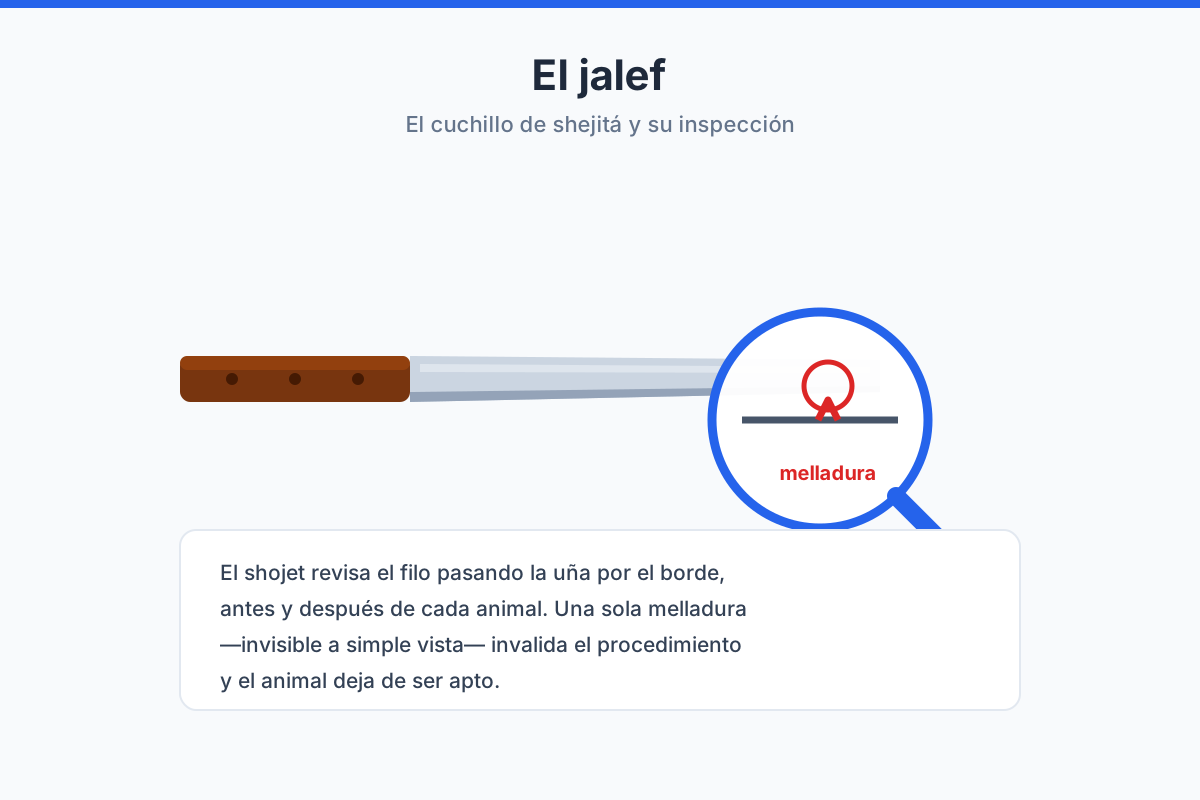
Shechita consists of a single, continuous cut to the animal's throat, severing the trachea and the oesophagus in one movement. It is performed with a knife called a chalaf, with an extremely refined edge and without any nick.
The stated goal of the method is that loss of consciousness be practically instantaneous. For that, halacha defines five conditions that invalidate the procedure if they are not met: the cut must be without pause, without pressure, without the knife being covered, within the correct anatomical area, and without tearing. If any one fails, the animal is not kosher — no exceptions, regardless of the economic value at stake.
The chalaf: why the knife is the centre of everything
The knife has almost obsessive requirements. It must be perfectly smooth, without the slightest imperfection on the edge. The shochet checks it by running a fingernail along the blade, a method that detects irregularities the eye cannot see, and does so before and after each animal. If a nick is found afterwards, that animal is invalidated retroactively, because there is no way to know whether the nick was there during the cut.
What this looks like inside a slaughterhouse
A relative of our team works in shechita, and what he describes gives a sense of the level of control in practice, beyond what the manuals say.
The chalaf is not only checked by the shochet before and after each animal: there is also a supervisor who inspects every knife in the facility, day after day, with an extremely strict standard. An imperfection not even perceptible to the naked eye is enough to take a knife out of use until it is reconditioned.
And there is something rarely mentioned: it is an environment where safety outranks production. Faced with any situation outside what was planned, the protocol is to stop everything, put the knives away and assess before continuing. There is no "let's just finish the shift anyway" logic. That combination of technical precision and operational seriousness is what sustains the reliability of the kosher seal on meat.
Bedika: the inspection that rejects a good share of animals
After shechita comes bedika, the inspection of internal organs, focused on the lungs. It looks for adhesions (sirchot) and signs of disease that would indicate the animal was not healthy.
This step rejects a significant percentage of animals that were already slaughtered correctly. That meat is not thrown away — it is sold through the conventional non-kosher circuit — but it explains much of the extra cost: the kosher slaughterhouse pays for every animal and can only sell as kosher those that pass inspection.
Animals whose lungs show no adhesion at all are classified as glatt (smooth, in Yiddish), the most demanding standard. We develop this in glatt kosher: how it differs from regular kosher.
Salting: why kosher meat is prepared differently
The Torah expressly prohibits consuming blood, so meat must go through an extraction process called melicha:
- Soaking in water for approximately 30 minutes, to soften it and open the pores.
- Salting with coarse salt over all surfaces, including folds and cuts.
- Resting for around an hour on an inclined surface or rack, so the blood drains away.
- Rinsing thoroughly, generally three times, to remove the salt.
Today this process is almost always carried out by the certified butcher shop or slaughterhouse before the product reaches the consumer. If you buy meat at a kosher butcher, it already comes koshered unless you are told otherwise. The classic exception is liver: because of its high blood content it cannot be koshered by salting and requires direct roasting over fire.
Frequently asked questions
Can anyone be a shochet?
No. It requires years of study of the relevant laws, supervised practical training, and a certification (kabbalah) granted by a rabbinic authority. They must also be an observant person, because the whole chain depends on their integrity.
Does shechita apply to poultry as well?
Yes, with the same principle, although the technical details and the knife differ because of the size. Kosher chicken goes through the same type of process as beef.
And does fish need shechita?
No. Kosher fish requires neither shechita nor salting, which greatly simplifies its preparation. It only has to meet the fins-and-scales criterion, explained in kosher fish.
Why is kosher meat so much more expensive?
Because of the sum of all the above: specialised staff, permanent supervision, animals rejected at inspection, and the additional salting process. It is not a brand premium, it is real operating cost.
Further reading
To understand what can be done with that meat once at home, see meat and milk: why they are not mixed. And if you are interested in the strictest standard, there is glatt kosher.
Among external sources, the Orthodox Union guide develops the laws of shechita with their sources, the OU Kosher YouTube channel publishes explanatory material on the process, and you can consult the Wikipedia article on shechita for historical context and contemporary debate.
📰 You might be interested
Kashrut Básico
Pareve: what it means and why it's so common on labels
Pareve is one of the most repeated words in kosher labeling. We explain what it means and why it's so valued.
Kashrut Básico
Glatt kosher: how is it different from regular kosher
The term "glatt" appears frequently in kosher butcher shops and restaurants. We explain what level of strictness it represents.
Kashrut Básico
Kosher eggs: what to check before using them
Eggs are pareve and generally kosher, but there is a mandatory checking step before cooking them.
Kashrut Básico
Kosher fish: fins and scales, the basic rules
Unlike meat, kosher fish does not require shechita, but it must meet a specific physical criterion.