Kasherización
How to kosher a dishwasher
Many families use the dishwasher for meat and dairy dishes in separate cycles. Here is what it takes to kosher it.
The dishwasher poses a particular challenge because its internal walls, filters and spray arms are in constant contact with food residue at high temperature, which can absorb flavors more persistently than other appliances.
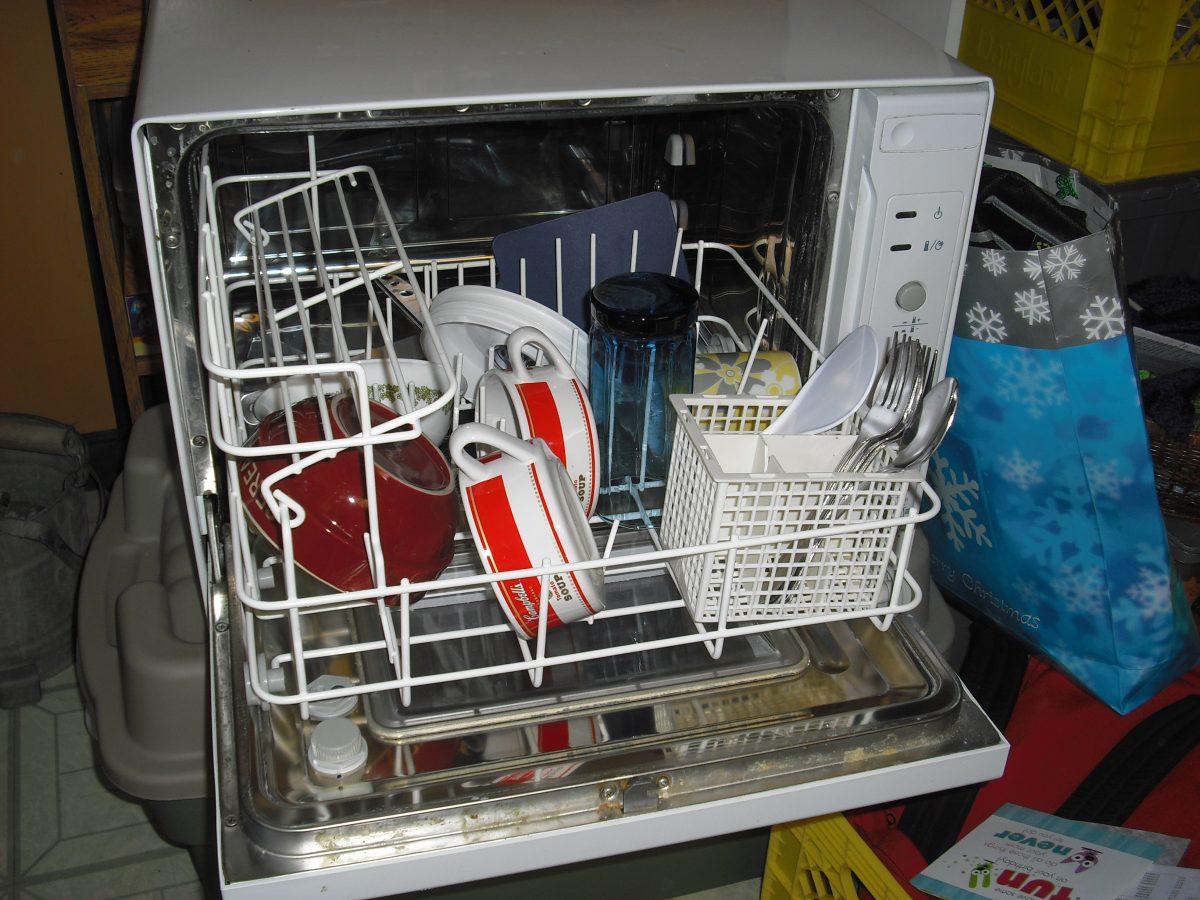
Why it generates so much rabbinic debate
Unlike an oven or a set of pots, a dishwasher has dozens of hidden crevices, a filter that traps food particles directly, and spray arms that recirculate hot water loaded with residue throughout the entire cycle. That combination makes some authorities treat it more strictly than almost any other appliance, and a few discourage using the same unit for both meat and dairy altogether, even on different days.
The procedure for those who do allow it
- Thorough cleaning of filters, spray arms and rubber seals, removing every visible particle by hand.
- Not using the dishwasher for 24 hours before koshering it.
- Running a full empty cycle at the highest possible temperature, ideally with a strong cleaning product.
- In some communities, it is recommended to use separate, interchangeable racks or trays for meat and dairy, rather than koshering the entire appliance between uses.
The alternative that avoids the problem at the root
Many families sidestep the debate entirely by using removable rack baskets or dedicated racks, one for meat and one for dairy, that go in and out of the same machine. Since the food itself never touches the machine's walls or filter directly, some rabbinic opinions consider this a much simpler solution than repeated koshering.
Differences between communities
Customs vary quite a bit on this topic — some Sephardic and Ashkenazi communities differ notably in how strict they are about dishwashers specifically. This is one of those cases where it is well worth consulting directly with the congregation's rabbi before deciding how to organize the kitchen, rather than assuming the same rule that applies to hagalah for pots also applies here.
Frequently asked questions
Is a dishwasher with a sanitizing high-heat cycle automatically easier to kosher?
It can help reach the required temperature faster, but the debate is less about temperature and more about the machine's internal structure and how food residue circulates inside it.
Do plastic dishwasher racks need separate koshering?
Plastic parts are generally treated differently from the metal interior; ask your rabbi about the specific model if this comes up.
Does using rack baskets fully resolve the issue for every community?
Not universally — some more stringent opinions still prefer a fully dedicated machine per category. It is worth confirming the criterion your community follows.
Related reading
For the koshering method used on pots, pans and cutlery, see hagalah: how to kosher metal utensils. And for the oven, which follows the same underlying logic through dry heat, see how to kosher an oven.
📰 You might be interested
Kasherización
How to kosher an oven
When an oven was used with non-kosher food, or you want to switch it from meat to dairy use, there is a specific process to make it kosher.
Kasherización
How to kosher a microwave
Microwaves have a different koshering process than a traditional oven, because they cook with steam rather than dry heat.
Kasherización
How to kosher metal utensils (hagalah)
Hagalah is the traditional method of immersion in boiling water used to kosher pots, cutlery and other metal utensils.